Who Moved My Window? The Quiet Rebellion Against the Corner Office
There's a scene in basically every prestige TV drama set in corporate America: the protagonist strides across an open floor plan, past rows of hunched associates, and disappears behind the glass walls of a corner office. Sunlight pours in from two directions. The city stretches out below. Power, confirmed.
But here's the thing — that scene is starting to feel like a period piece. Not just culturally, but architecturally. Some of the most respected design firms in the country are quietly, deliberately dismantling the corner office ideal. And the reasoning goes a lot deeper than vibes.
The View From the Top (And Why It's Overrated)
Let's be honest about what the traditional corner office actually does. It takes the best natural light in the building — the kind that comes from two exposures, that tracks the sun across the day, that genuinely improves mood and alertness — and locks it behind a single person's door. Everyone else gets fluorescent overhead fixtures or, if they're lucky, a slice of borrowed daylight from fifteen feet away.
Architects have known for years that access to natural light is one of the most significant factors in workplace wellbeing. A widely cited study out of Northwestern University found that employees with window access slept an average of 46 more minutes per night than those without — a downstream effect of better circadian regulation during work hours. That's not a small thing. That's the difference between a functional human being and someone who needs three coffees to get through a Tuesday afternoon meeting.
So when you centralize that resource for one person at the top of the org chart, you're essentially making a design decision that says hierarchy matters more than collective performance. A growing number of architects are calling that out.
Firms Leading the Shift
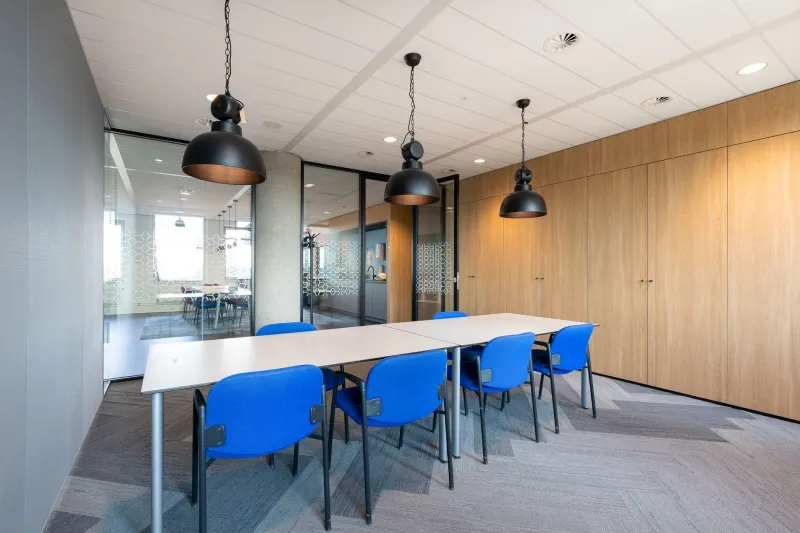
In cities like Seattle, Austin, and New York, forward-thinking companies redesigning their headquarters are working with architects to flip the traditional layout entirely. The new model pushes private offices — when they exist at all — toward the interior of the floor plate, while opening the perimeter to shared zones, collaborative seating, and focus areas that anyone can use.
Some firms have gone further, eliminating enclosed executive offices altogether in favor of what designers are calling "focus neighborhoods" — clusters of semi-private workstations with acoustic shielding, adjustable lighting, and enough visual separation to support deep work without the territorial baggage of a named office.
One architecture firm working on a financial services headquarters in Chicago described the brief they received from their client as almost radical by traditional standards: no one person should have more than a proportional claim on daylight. The result was a floor plan where the CEO's workspace sits in the same light-access tier as the junior analysts. Different in scale and privacy, sure. But not different in terms of how the sun hits your desk.
The Psychology of Visibility
There's another dimension to this that doesn't get talked about enough: what it actually feels like to work in a glass office where everyone can see you.
For years, the assumption was that visibility signaled confidence and openness — a leader with nothing to hide. But research into workplace psychology has complicated that story considerably. Being perpetually observable creates a low-grade performance anxiety that most people aren't even consciously aware of. You're always slightly "on." You can't zone out for two minutes to think through a problem without wondering if someone's reading your posture as disengagement.
This is why some of the most productive thinkers in any organization — the people doing the genuinely hard cognitive work — tend to gravitate toward the least visible corners of whatever space they're in. Not because they're hiding. Because real focus requires a kind of psychological safety that constant visibility undermines.
Architects are taking this seriously. The new generation of workplace design treats privacy not as a perk for executives but as a functional requirement that should be distributed across the entire office based on what kind of work people are actually doing.
Democratizing the Good Stuff
The most interesting shift happening right now isn't just about where the corner office goes — it's about what replaces it as a status marker.
In offices designed by firms like Gensler, NBBJ, and a wave of smaller boutique practices, the premium amenities are increasingly collective: a well-designed kitchen that actually invites people to linger, a library-style quiet zone with proper acoustic treatment, a rooftop terrace that's genuinely usable rather than just photographable. These aren't perks reserved for a floor of senior partners. They're part of the spatial logic for everyone.
What's fascinating — and maybe a little telling about where workplace culture is headed — is that younger employees often cite these shared amenities as more meaningful than the prospect of eventually earning a private office. The corner office as aspiration is losing its grip, and not just because remote work reshuffled everyone's relationship to the physical workplace. It's also because the design conversation has matured.
What We're Actually Watching Happen
This isn't a story about offices becoming egalitarian utopias. Private spaces still exist. Seniority still shapes how much space you get and how much control you have over it. Nobody's pretending otherwise.
But the architectural logic is genuinely shifting. The idea that the best seat in the house should go to the highest-ranking person — regardless of whether they actually need it, use it, or benefit from it more than anyone else would — is losing its automatic authority.
That's worth paying attention to, because office design doesn't just reflect organizational culture. It shapes it. When you walk into a building where the light is shared and the private spaces are distributed based on function rather than title, you get a subtle but real message about how that organization thinks about its people.
And when you walk into a building where the corner office is still the crown jewel? You get a message about that too.
The corner office isn't dead. But for the first time in a long time, architects are asking whether it ever made sense to begin with — and the answers they're coming up with are genuinely reshaping what American workplaces look like from the inside out.