Log Off and Look Around: Why the Most Exciting Design Is Happening on Your Block
Somewhere in a gleaming Silicon Valley campus, a team of engineers is building a virtual city. It has streets, storefronts, maybe even a park. You can walk through it wearing a headset, admire the geometry, feel like you're somewhere. And then you take the headset off, step outside, and realize your actual neighborhood still has a broken sidewalk, a shuttered hardware store, and a bus stop with no shelter.
That gap — between the fantasy of designed digital space and the very real, very unfinished state of American communities — is exactly what a new generation of designers is refusing to ignore.
The Metaverse Pitch Didn't Land the Way Anyone Expected
Let's be honest: the metaverse moment has been a little awkward. After years of breathless promises that virtual real estate would reshape how we live, work, and gather, the reality has been far more underwhelming than the pitch decks suggested. Virtual land prices collapsed. Headsets collect dust. And most people, given the choice between a digital plaza and a real one with good coffee and actual sunlight, are picking the latter every single time.
This isn't just a tech fumble — it's a signal. People are hungry for physical space that works. And a smart, scrappy cohort of architects, urban designers, and community organizers has been paying close attention.
Tactical Urbanism Is Having a Moment (Again, but Better)
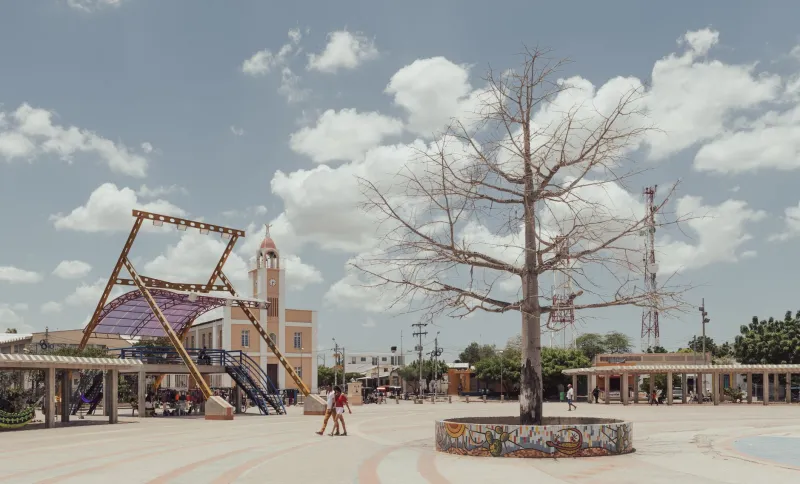
The term "tactical urbanism" has been floating around design circles for over a decade, but what's happening right now feels different in scale and ambition. Cities like Detroit, Houston, Albuquerque, and Pittsburgh — places that don't always show up on the glossy architecture-magazine circuit — are becoming laboratories for low-cost, high-impact interventions that transform how residents actually experience their neighborhoods.
Think painted intersections that double as community gathering spots. Underused parking lots converted into weekend markets with moveable furniture and shade structures. Vacant storefronts handed over to local artists or small food vendors for pop-up tenancies that test what a block might become before anyone commits to a lease.
None of this requires a render farm or a VR headset. It requires listening, iteration, and the willingness to treat a city block as a prototype rather than a finished product.
"The most interesting design problem right now isn't 'how do we build a virtual world?' — it's 'how do we fix the one we already have,'" says one urban designer working on neighborhood revitalization projects across the Rust Belt. "And that second problem is a lot harder, a lot more interesting, and a lot more meaningful."
Community-Driven Design Is Not a Compromise — It's the Point
One of the more persistent myths in architecture is that community input waters things down. That the purest design vision comes from a single brilliant mind, unsullied by committee feedback or neighborhood meetings. That myth is getting a serious reckoning.
Across the country, projects that center community voices from the very beginning — not as a PR checkbox, but as a genuine design driver — are producing spaces that actually get used. Imagine that.
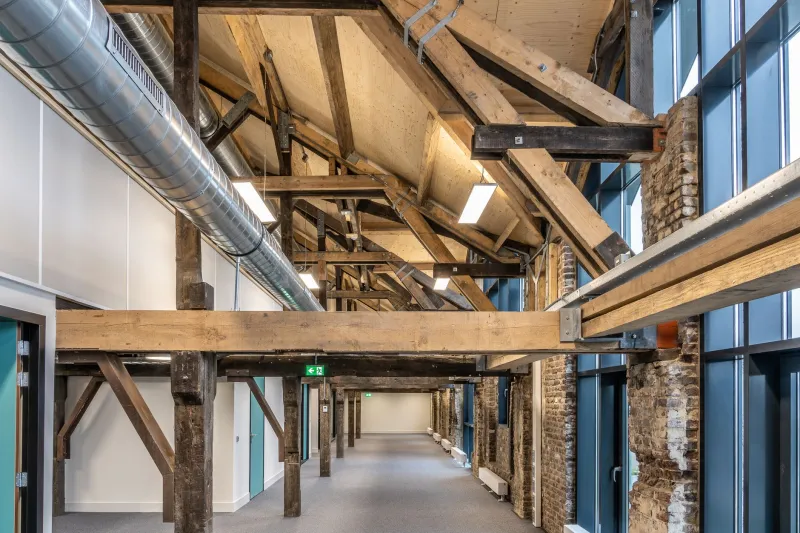
In South Los Angeles, community organizations have partnered with local designers to reimagine schoolyard spaces as neighborhood parks after hours, creating green space in areas that are chronically underserved. In Cleveland, residents of historically disinvested neighborhoods are co-designing pocket parks and community gardens with landscape architects who treat the process as collaborative rather than consultative. In Philadelphia, adaptive reuse projects are being shaped by the people who will actually occupy them — not just by developers chasing tax credits.
What these projects share isn't a unified aesthetic. It's a philosophy: that the people who live somewhere are the real experts on what that place needs, and that design's job is to translate that knowledge into built form.
The Screen Can't Replicate What a Good Street Does
Here's what no amount of digital design can manufacture: the feeling of a neighborhood that works. The specific pleasure of a block where the coffee shop spills onto the sidewalk, the bookstore has a dog, the park has actual shade, and you run into someone you know. That texture — social, sensory, serendipitous — is what makes a place feel like home rather than just a location.
Architects and urban designers who are focused on placemaking at the hyperlocal level understand this intuitively. They're not trying to compete with screens. They're doing something screens fundamentally cannot: creating conditions for the kind of unscripted human interaction that makes city living worth it.
This is also, not coincidentally, good for mental health. Research consistently shows that access to well-designed public space — parks, plazas, pedestrian-friendly streets — correlates with lower rates of anxiety and depression. The built environment shapes how people feel. That's not a soft claim; it's one of the most well-documented findings in environmental psychology. And it's a reminder that design isn't just aesthetics. It's infrastructure for human wellbeing.
What Designers Can Learn From the Hype Cycle
There's a version of this story that's just dunking on tech, and that's not really the point. The metaverse conversation, for all its overselling, did force a useful question: what do people actually want from shared space? What makes somewhere worth going?
The answer, it turns out, is mostly the same things it's always been. Comfort. Community. A sense of belonging. The ability to stumble into something unexpected. These aren't revolutionary desires — but meeting them, consistently, in real American neighborhoods, is genuinely hard work. It requires designers who are willing to get off the rendering software and into the community meeting. Who see a struggling commercial corridor not as a liability but as a canvas. Who understand that the most meaningful design intervention might be a better bench placement or a single mature tree.
The Real Innovation Is Offline
If you're a designer — or just someone who cares about the places you live — the most exciting frontier right now isn't virtual. It's the neighborhood that's been overlooked, underfunded, or written off as unfixable. It's the parking lot that could be a plaza. The vacant lot that could be a garden. The underpass that could be an event space.
The designers making moves in this space aren't waiting for a tech company to hand them a platform. They're building one out of concrete, conversation, and community trust. And honestly? That's a better show than anything in the metaverse.