Sit Here, Not There: The New Science of Where You Put the Couch
There's a moment in every interior design consultation that used to be an afterthought. The furniture arrives, the rug gets rolled out, and someone points at the longest wall and says, "Couch goes there." Done. Move on to the throw pillows.
That era is ending.
Across living rooms, open-plan offices, boutique hotels, and neighborhood coffee shops, a quieter — but arguably more consequential — design conversation is happening. It's about seating. Specifically, it's about where people sit relative to one another, to windows, to doors, and to the center of a room. And the designers leading this conversation will tell you, with complete seriousness, that getting it wrong can quietly wreck a space no matter how beautiful it looks on camera.
The Couch Against the Wall Is a Social Disaster
Ask any residential designer worth their fee what the single most common mistake they walk into, and a surprising number will say the same thing: furniture pushed to the perimeter.
It feels intuitive. Walls feel safe. Backing furniture up to them seems to open up the middle of the room. But what it actually does is create a waiting-room dynamic — everyone seated at the edges, facing inward, slightly too far apart to have a real conversation without raising their voices.
"When you push everything to the walls, you're not creating a living room," says one Brooklyn-based interior designer who works primarily with residential clients in New York and Chicago. "You're creating a holding area. Nobody wants to linger in a holding area."
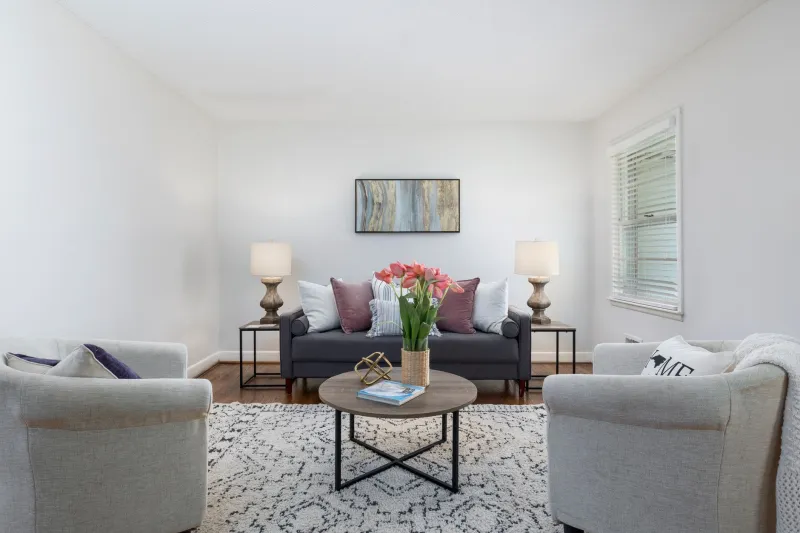
The alternative — floating furniture toward the center, creating tighter clusters, deliberately orienting chairs and sofas toward each other rather than toward a television — sounds simple. But it requires resisting a deeply ingrained instinct, and it changes everything about how a room gets used.
Studies out of environmental psychology programs at universities like UC Berkeley and Cornell have shown for years that proxemics — the study of how physical distance affects human interaction — plays out in domestic spaces just as much as in workplaces. Seat two people at a 90-degree angle to each other, and conversation flows more naturally than if they're placed face-to-face or side by side. These aren't decorating tips. They're behavioral findings. And designers are finally treating them that way.
The Office Just Got a Seating Redesign (Again)
If the open-plan office was the first major seating experiment of the 21st century, the post-pandemic workplace is the correction.
The era of long communal tables and bench seating — everyone facing the same direction, shoulder to shoulder, like passengers on a very expensive bus — is giving way to something more nuanced. Workplace designers are now talking about "activity-based seating" with the same energy that architects once reserved for structural innovation.
The idea is straightforward: different tasks require different physical configurations. Deep focus work benefits from high-backed seating that creates visual enclosure. Collaborative brainstorming sessions open up when chairs are arranged in loose circles without a dominant "head." Even the angle of a chair relative to a window affects how long someone can sustain concentration.
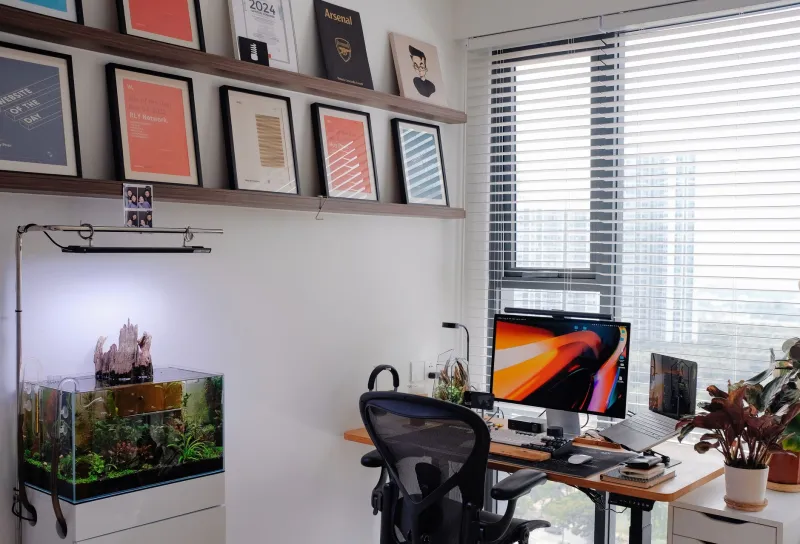
Firms like Gensler and IA Interior Architects have been publishing research on this for years, but what's changed recently is the speed at which these ideas are trickling into smaller offices, co-working spaces, and even home office setups. People who spent two years working from a kitchen chair angled toward a wall have strong opinions now about what seating arrangements actually support productivity — and what just looks good in a design magazine.
Cafes Figured This Out First
Want to see intentional seating design in the wild? Skip the architecture firms for a minute and walk into any independently owned coffee shop that's been packed since it opened.
The best café designers — and yes, that's a real specialty — will tell you that seating arrangement is the entire game. A single-person seat angled toward a window with a partial view of the street? That fills up first, every time. A large communal table in the center? It creates energy and makes the space feel alive, but it needs to be the right size — too big and it becomes intimidating, too small and it feels crowded.
Corner booths create intimacy. Bar seating along a window creates a performance of productivity. Clusters of two chairs around a small table near an outlet are essentially a co-working product offering. None of this is accidental in a well-run café, and the owners who understand it are the ones with lines out the door.
This café logic is now moving into residential design in a real way. Homeowners are starting to think about their living rooms the way hospitality designers think about a dining room floor plan — asking not just "what fits?" but "what does this arrangement do to the people in it?"
The Conversation Pit Is Back, and It Brought Friends
If you want a symbol for where seating design is headed, look no further than the conversation pit — that sunken, cushioned gathering space that had its cultural moment in the 1960s and 1970s and then largely disappeared.
It's back. Not everywhere, and not always literally sunken, but the principle behind it — creating a defined, slightly enclosed seating zone that signals "this is where we talk" — is showing up in high-end residential projects from Los Angeles to Nashville to the Hudson Valley.
Architects are carving out alcoves, using changes in ceiling height to define seating areas, and specifying curved sectionals that face inward rather than pointing at a screen. The goal isn't nostalgia. It's intentionality. The conversation pit, at its best, is a physical commitment to the idea that gathering matters — that a room can be designed for connection rather than just furnished for comfort.
"People are craving spaces that feel like they were made for them to actually be in," notes one Los Angeles-based architect currently working on a hillside residence that centers its entire main floor around a curved, semi-enclosed lounge. "The seating arrangement is the architecture. Everything else is just framing it."
What Your Living Room Is Actually Saying
Here's the uncomfortable truth that seating-obsessed designers will eventually get around to: most American living rooms are arranged for television, not for people.
The couch faces the screen. The chairs flank the couch, also facing the screen. The ottoman sits between them, also facing the screen. It's a theater configuration, and it works great for watching things. It works terribly for talking, for thinking, for the kind of slow, wandering conversation that actually makes a home feel like a home.
This doesn't mean screens need to disappear from living rooms — that ship has sailed, and no one's pretending otherwise. But designers are increasingly pushing back on the idea that the screen should be the room's organizing principle. Rotating the sofa even slightly, adding a chair that faces the room rather than the wall, creating a secondary seating cluster near a window — these are small moves with outsized effects.
The revenge of the seating chart, if you want to call it that, is really just the design world catching up to something humans have known intuitively for a long time: how you arrange people in a space determines what happens between them. And that, it turns out, is worth obsessing over.