What Does This Room Smell Like? Designers Are Finally Asking
Close your eyes and think about a space you've loved. Maybe it's your grandmother's kitchen, a favorite bookstore, a hotel lobby on a trip you still talk about. Chances are, before you picture the lighting or the furniture, you remember how it smelled.
This is not a coincidence. The olfactory system has a more direct neural pathway to the brain's emotional and memory centers than any other sense. Smell bypasses the rational brain almost entirely and lands straight in the limbic system — the part that handles feelings, associations, and the deep-tissue memory of places. Architects have spent decades obsessing over light, materiality, acoustics, and spatial flow. Scent, somehow, got left out of the conversation.
That omission is finally being corrected, and the results are stranger, more interesting, and more emotionally powerful than most people expect.
The Hotel Industry Figured This Out Early
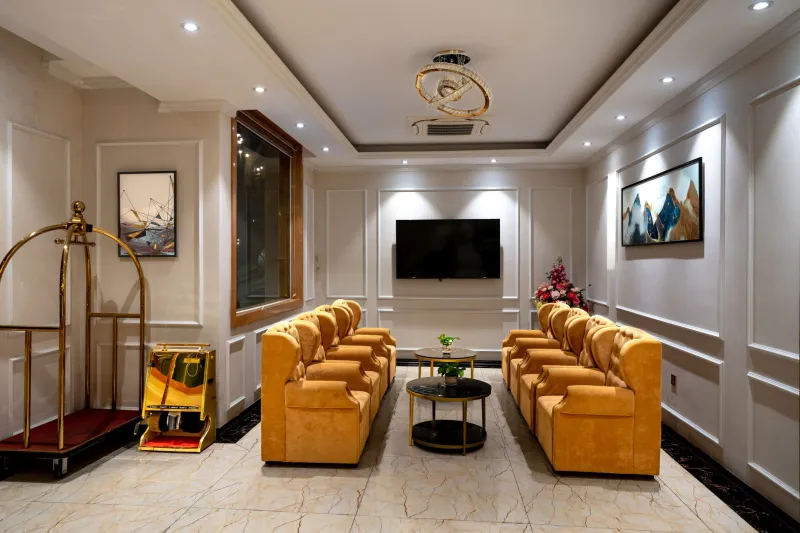
If you've walked into a Westin in the last fifteen years and felt inexplicably calm, you've already experienced intentional scent design without knowing it. The Westin's signature "White Tea" scent — a light, clean blend diffused subtly through HVAC systems in lobbies and common areas — was one of the earliest examples of a major hospitality brand treating smell as a brand asset.
Since then, the practice has exploded. Virtually every significant luxury hotel chain in the United States now has a signature scent program. The Ritz-Carlton uses different scent profiles in different properties to reinforce a sense of place — something warm and woody in mountain locations, something lighter and marine-adjacent near coastal properties. The Standard Hotels have experimented with scent as part of their broader sensory brand identity.
But this is no longer just a hospitality trick. The ideas that started in hotel lobbies are migrating into high-end offices, retail environments, and increasingly, private residences — and the designers driving that migration are treating scent with the same rigor they apply to a lighting plan.
Scent as Architecture, Not Air Freshener
There's an important distinction to make here, and the designers working in this space make it immediately and emphatically: what they're doing has nothing to do with plug-in air fresheners or scented candles from a big-box store.
Intentional scent design — sometimes called olfactory architecture or sensory branding, depending on the context — is about understanding how specific aromatic compounds interact with a space's ventilation, volume, materiality, and use pattern to create a consistent, calibrated sensory experience.
"A candle is a mood accessory," explains one New York-based sensory consultant who works with architecture firms on high-end commercial and residential projects. "What we're doing is closer to acoustic design. You're thinking about how scent moves through space, where it concentrates, where it fades, how it changes as a room warms up during the day. It's a system, not a product."
The tools of the trade have evolved significantly. Bespoke fragrance houses — some operating out of New York, others out of Los Angeles and Chicago — now work directly with architects to develop custom scent profiles for specific spaces. Cold-air diffusion systems, which disperse fragrance without heat or moisture, can be integrated directly into HVAC infrastructure, making scent as invisible and consistent as climate control.
The cost of entry at this level is not trivial. A custom scent development process with a serious fragrance house can run anywhere from $15,000 to well over $100,000 depending on complexity. But the clients commissioning this work — boutique hotel developers, tech company headquarters, luxury residential builders — increasingly see it as a standard line item rather than an extravagance.
Memory, Mood, and the Case for Smelling Your Office
The science behind why this matters is not subtle. Research published in journals including Chemical Senses and Frontiers in Psychology has documented specific, reproducible effects of particular aromatic compounds on human cognition and mood.
Lavender reduces anxiety and lowers heart rate. Rosemary has been shown in multiple studies to improve memory retention and alertness. Citrus scents — particularly lemon and bergamot — are associated with improved mood and reduced perception of stress. Cedarwood and sandalwood create feelings of groundedness and calm.
Workplace designers are taking note. Several major corporate campuses in Silicon Valley have begun working with scent consultants to introduce different aromatic profiles in different zones — something energizing near collaborative spaces, something calming near focused work areas, something neutral and clean in meeting rooms where diverse groups need to arrive at consensus without the distraction of a strong sensory signature.
At Salesforce's San Francisco headquarters, subtle scent programming has reportedly been part of the broader wellness-oriented design strategy. A growing number of WeWork locations have experimented with scent as part of their environmental branding. It's becoming, quietly, an expected feature of premium workplace design.
Your Home's Smell Is a Design Decision (Whether You Made It or Not)
Here's what the residential designers working in this space want homeowners to understand: your home already has a scent profile. You just didn't choose it intentionally.
The combination of your building materials, your HVAC system, your cooking habits, your cleaning products, and your furniture off-gassing creates an olfactory fingerprint that every guest experiences the moment they walk in — and that you've likely stopped noticing entirely due to olfactory adaptation. (This is the same phenomenon that makes it impossible to smell your own house after about 20 minutes of being in it.)
Forward-thinking residential designers are starting to address this at the project level. That means specifying low-VOC materials not just for air quality reasons but for scent management. It means thinking about ventilation flow relative to cooking spaces. It means considering whether the entryway — the first olfactory impression of a home — gets any natural scent from materials like cedar, stone, or live plants, or whether it just smells like carpet and drywall.
For clients who want to go further, custom scent systems are increasingly available at the residential scale. Smaller cold-air diffusers designed for home use can be programmed to run on schedules — something grounding and warm in the evening, something fresh and light in the morning. Several fragrance houses now offer residential consultation services that were, until recently, only available to commercial clients.
The Pushback, and Why It's Worth Having
Not everyone in the design world is enthusiastic about this direction. The objections are real and worth taking seriously.
Scent sensitivity varies enormously among individuals, and what reads as pleasant to one person can be genuinely distressing to another. Migraine sufferers, people with certain allergies, and individuals with sensory processing differences can find even subtly scented environments uncomfortable or inaccessible. Any serious scent design program has to grapple with this — and the best practitioners do, building in adjustability and restraint as core principles.
There's also a legitimate conversation to be had about manipulation. If scent can reliably influence mood and behavior, deploying it in commercial environments without disclosure raises ethical questions that the industry hasn't fully worked through yet.
But these are conversations worth having precisely because the stakes are real. Scent isn't a gimmick. It's a dimension of human experience that architecture has been ignoring for too long. The designers who are taking it seriously aren't chasing a trend — they're filling in a gap that should have been addressed decades ago.
The future of great interior design might just smell like something. And the best part is, you'll feel it before you can name it.