Lights, Camera, Living Room: How Video Calls Became the Unlikely Force Redesigning American Homes
There's a moment most remote workers know well. You hop on a Zoom call, catch a glimpse of your own little box in the corner of the screen, and suddenly you're not thinking about the meeting at all. You're thinking about the crooked shelf behind you, the pile of laundry bleeding into frame, or the way that overhead light is doing absolutely nobody any favors. It lasts maybe three seconds — and then you spend the next forty-five minutes quietly mortified.
That moment, repeated millions of times a day across American homes, has quietly triggered a design movement nobody really planned for. Call it the Zoom Room Effect: the slow, steady reshaping of domestic interiors not around how we live in them, but around how they look in a 1080p rectangle.
The Four-Foot-Wide World That Now Defines You
Here's the thing about video call backgrounds — they've become a form of nonverbal communication that rivals what you're actually saying. Interior designers and workplace consultants have been tracking this for a few years now, and the consensus is pretty clear: people read your background the way they used to read your handshake or your office decor.
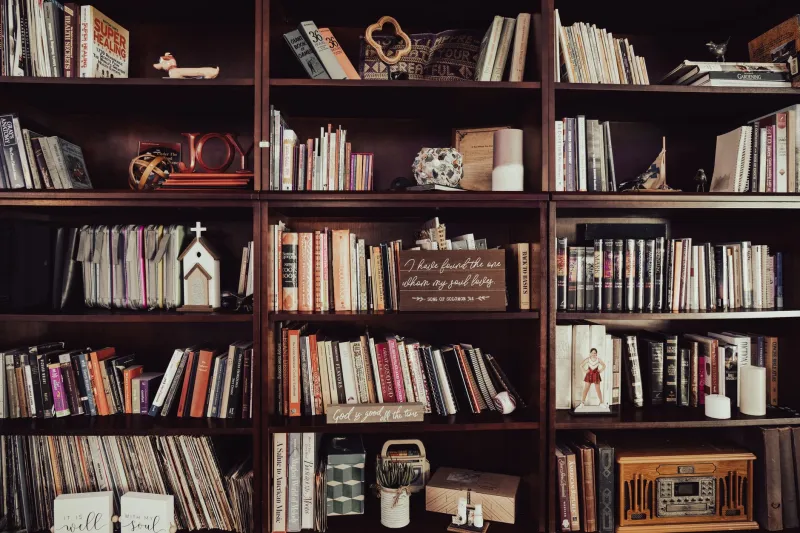
A curated bookshelf signals intellectual depth. A gallery wall with tasteful prints says creative but organized. Plants — the right plants — communicate that you're the kind of person who nurtures living things and probably drinks good coffee. A blank white wall? That's a statement too, though designers tend to disagree on whether it reads as minimalist confidence or just... forgetting.
What's wild is that this isn't happening in some abstract, trend-forecasting sense. It's showing up in actual purchasing data. Retailers like West Elm and CB2 have reported spikes in sales of items that are, let's be honest, specifically sized and styled to look great at camera distance. Floating shelves, architectural wall sconces, small-scale art prints — the kind of pieces that don't necessarily transform a room but absolutely transform a background.
Designers Weigh In (And Some of Them Are Annoyed)
For a certain stripe of interior designer, the Zoom Room Effect represents everything complicated about where American design culture has landed. The whole premise of good interior design — at least in its purest form — is that a space should serve the people living in it. Comfort, flow, light quality, acoustics, emotional resonance. The idea that a significant design decision might now hinge on how a corner reads on a laptop screen feels, to some, like a betrayal of the whole enterprise.
"I've had clients ask me to design their home office backdrop before we've even talked about seating," one New York-based residential designer told us. "The chair they sit in for eight hours a day is almost an afterthought. But the wall behind it? We'll spend three meetings on that."
That tension — between designing for the screen and designing for the body actually in the space — is real. And it's producing some genuinely strange outcomes. Rooms optimized for camera angles that are awkward to actually inhabit. Lighting setups that look incredible on video but cast the room itself in a weird, clinical glow. Bookshelves arranged for visual balance rather than actual accessibility. It's a little like staging a home for sale, except you never leave.
But Here's the Flip Side
Not everyone thinks the Zoom Room Effect is a design villain. There's a decent argument that this strange, screen-mediated pressure has pushed a lot of Americans to take their home environments more seriously than they ever did before.
Pre-pandemic, the home office — if it existed at all — was often a sad corner of a guest bedroom, furnished with whatever didn't fit anywhere else. A hand-me-down desk, a task chair from 2009, fluorescent lighting if you were lucky. Most people simply didn't think much about it because nobody was watching.
Now? People are investing in their spaces in ways that genuinely improve daily life, even if the original motivation was vanity-adjacent. Better lighting, it turns out, doesn't just flatter your complexion on camera — it reduces eye strain and improves mood. A thoughtfully arranged wall doesn't just look good on screen — it creates a visual anchor that helps your brain understand this is a place for focused work. The aesthetic pressure of the camera has, in some cases, accidentally produced ergonomically and psychologically healthier spaces.
"Honestly, I'll take whatever gets people to care about their environments," says a Chicago-based designer who works primarily with remote professionals. "If it took Zoom to make someone think about lighting for the first time in their adult life, fine. We work with where people are."
The Performative Interior and What It Costs
Still, there's something worth sitting with in all of this. When we design a space for its performance rather than its experience — when the primary audience is a grid of coworker thumbnails rather than the person actually living there — we've made a quiet but significant shift in what interiors are for.
The home, at its best, is a place that knows you. It holds your weird collection of objects, your preferred reading light, your particular relationship to clutter and quiet. The camera-ready background, by definition, is edited. Curated. Audience-facing. It's a version of home that's been smoothed out for public consumption, which is a very different thing from a home that actually fits.
There's also the irony that the more we optimize our spaces for screens, the further we drift from the tactile, sensory richness that makes physical spaces worth inhabiting in the first place. The rough texture of a plaster wall, the warmth of afternoon light hitting a wood floor, the way a good chair holds you after a long day — none of that survives the camera. And if we stop prioritizing those things because they don't show up on video, we lose something that no filter or ring light can replace.
What Comes Next
As hybrid work settles into something resembling permanence across American professional life, the Zoom Room Effect isn't going anywhere. If anything, it's maturing. The early wave of panic-buying faux-shiplap and stacking aesthetically pleasing books you'll never read is giving way to something more considered — a genuine reckoning with what it means to have a space that works both on camera and off.
The designers doing the most interesting work right now are the ones threading that needle: spaces that are visually coherent and camera-friendly without sacrificing the lived-in quality that makes a home feel human. It's not easy, but it's a genuinely interesting design problem — one that didn't really exist five years ago.
And maybe that's the most honest thing you can say about the Zoom Room Effect. It's strange, it's a little absurd, and it's produced some genuinely questionable design choices along the way. But it's also pushed millions of Americans to look at their walls, their light, their space — and actually see it. That's not nothing.