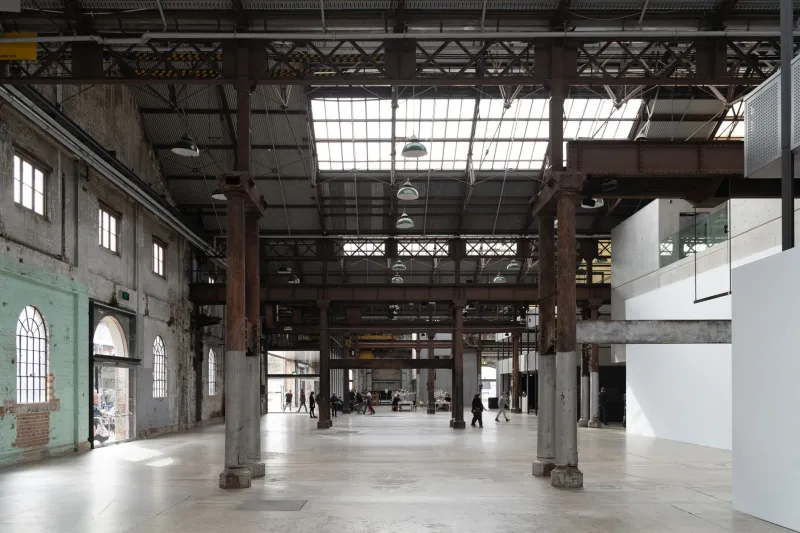
Living Walls, Sunlit Rooms, and Stone Floors: Inside America's Obsession with Bringing the Outdoors In
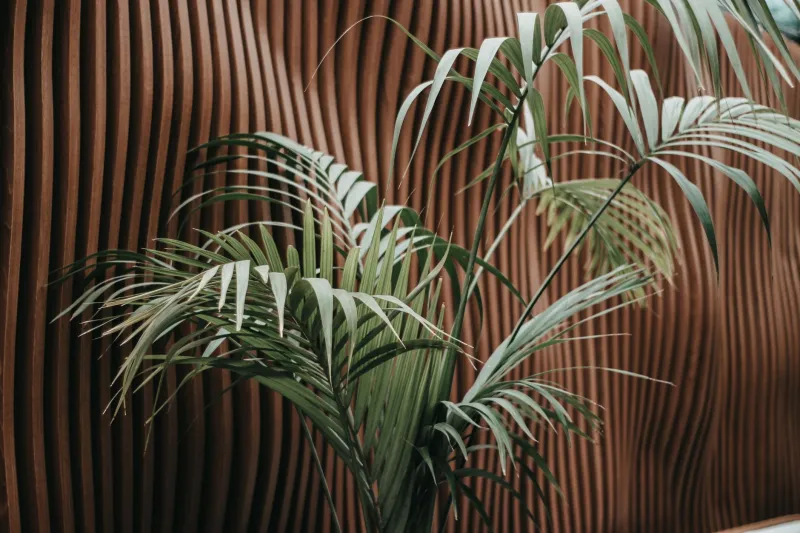
If you've spent any time scrolling through design content lately — or honestly, just watching what's trending on platforms like ours — you've probably noticed something. Moss walls. Skylights that flood entire rooms with natural light. Raw stone countertops. Exposed wood beams. Interior courtyards with actual trees growing in them. It's not a coincidence, and it's not just an aesthetic phase. What you're seeing is biophilic design going mainstream in the American home, and architects and interior designers across the country are scrambling to keep up with demand.
So what exactly is biophilic design? At its core, it's the practice of integrating natural elements — light, water, plants, organic textures, and views of the outdoors — into built environments. The term comes from the Greek biophilia, meaning "love of life," a concept popularized by biologist E.O. Wilson in the 1980s. But the idea that humans feel better when surrounded by nature isn't exactly revolutionary. What is new is how seriously architects and designers are taking it, and how deeply it's starting to reshape residential and commercial spaces from coast to coast.
Why Now? The Wellness Factor
Timing matters here. The pandemic pushed millions of Americans indoors for extended stretches, and a lot of people discovered — painfully — just how much their environment affects their mental state. Suddenly, having a window that actually let in sunlight wasn't a luxury; it felt like a survival need. Studies backed up what people were already feeling: access to natural light, greenery, and organic materials has measurable effects on stress levels, sleep quality, cognitive performance, and overall mood.
Designers started fielding a new kind of client request. Not just "make it look nice," but "make it feel calming." That distinction is everything in biophilic design. The goal isn't decoration — it's sensation. A room with a living plant wall doesn't just look interesting; it changes the air quality, introduces subtle movement, and creates a psychological anchor that synthetic materials simply can't replicate.
"People came to us after 2020 with a completely different vocabulary," says one Los Angeles-based interior architect who has worked on high-end residential projects across California and the Pacific Northwest. "They weren't asking for marble and chrome anymore. They wanted warmth. They wanted texture. They wanted to feel like they were somewhere outside, even when they were inside."
What It Actually Looks Like in Practice
Biophilic design isn't one look — it's a philosophy that can express itself in wildly different ways depending on the project, the region, and the budget. In a Brooklyn brownstone renovation, it might mean tearing out a dropped ceiling to expose original timber joists, adding a skylight above the stairwell, and swapping out synthetic flooring for reclaimed white oak. In a Phoenix desert home, it could be a central courtyard with a reflecting pool and native saguaros visible through floor-to-ceiling glass panels.
Some of the most striking implementations involve living systems. Vertical gardens — sometimes called living walls or green walls — have become a signature element in both residential and commercial spaces. These are modular systems where plants grow in panels mounted directly to walls, often with built-in irrigation. They've shown up in hotel lobbies in Nashville, office atriums in Seattle, and increasingly in private homes where clients want something that feels genuinely alive.
Natural light design is another major pillar. This goes beyond just adding more windows. Architects are rethinking the orientation of entire floor plans around sun paths, using light wells, clerestory windows, and reflective surfaces to pull daylight deep into interior spaces that would otherwise rely on artificial lighting all day. In cities like Chicago and Minneapolis, where winters are long and gray, this kind of intentional light design can be genuinely transformative.
Water features are making a comeback too — not the tacky fountain-in-the-foyer kind, but subtle, integrated elements. Shallow reflecting pools at entryways. Narrow channels of water running through outdoor-indoor transition spaces. The sound of moving water, it turns out, is remarkably effective at reducing perceived stress.
Challenges for Design Professionals
Implementing biophilic principles isn't without its complications. Living walls require maintenance infrastructure — irrigation systems, drainage, adequate light levels — that need to be planned from the start of a project, not bolted on at the end. Natural materials like stone, wood, and clay behave differently than synthetic alternatives; they expand, contract, stain, and age in ways that require careful specification and client education.
There's also the budget conversation. Biophilic elements done well tend to cost more upfront, even if they deliver long-term value through energy efficiency, occupant wellbeing, and property appreciation. Design professionals working with clients who are new to the concept often need to make the ROI case clearly — framing it not just as aesthetics but as an investment in health and quality of life.
Regional climate plays a huge role in what's feasible. What works beautifully in a humid Pacific Northwest setting may be a maintenance nightmare in an arid Southwest climate. Smart biophilic design adapts to local ecology rather than fighting it — which means sourcing plants native to the region, using locally quarried stone, and working with natural ventilation patterns rather than against them.
From Residential to Commercial — and Back Again
One of the most interesting dynamics in this space is how commercial architecture has been pushing biophilic innovation, which then filters into residential design. Corporate campuses — think Amazon's Spheres in Seattle, those dramatic glass domes filled with over 40,000 plants — showed the world what a truly immersive biophilic environment could look like. That kind of high-profile, high-budget project plants a seed (pun intended) in the cultural imagination.
Now homeowners are asking for their own version of that experience at a domestic scale. And designers are rising to the challenge in creative ways — sometimes with big-ticket elements like custom stone feature walls or structural skylights, and sometimes with simpler moves like replacing a solid interior wall with glass to borrow a view of the backyard.
Restaurants, hotels, and retail spaces have also leaned hard into biophilic design as a differentiator, and the content those spaces generate — on social media, in design publications, on streaming platforms like ArchiWorld TV — keeps the cycle of inspiration going.
What's Next
The trajectory here is pretty clear. As the connection between built environments and human health becomes better documented and more widely understood, biophilic design will shift from trend to standard practice. Building certification programs like WELL and LEED already incorporate biophilic elements into their frameworks. More cities are beginning to include green infrastructure requirements in zoning and building codes.
For design professionals, getting fluent in biophilic principles now isn't just about staying current — it's about being ready for where client expectations are heading. The demand isn't going anywhere. If anything, as more people become aware of how much their surroundings shape their wellbeing, the bar for what a well-designed home looks and feels like is only going to rise.
And if you want to see what that looks like in practice — real projects, real designers, real before-and-afters — well, you're in the right place.